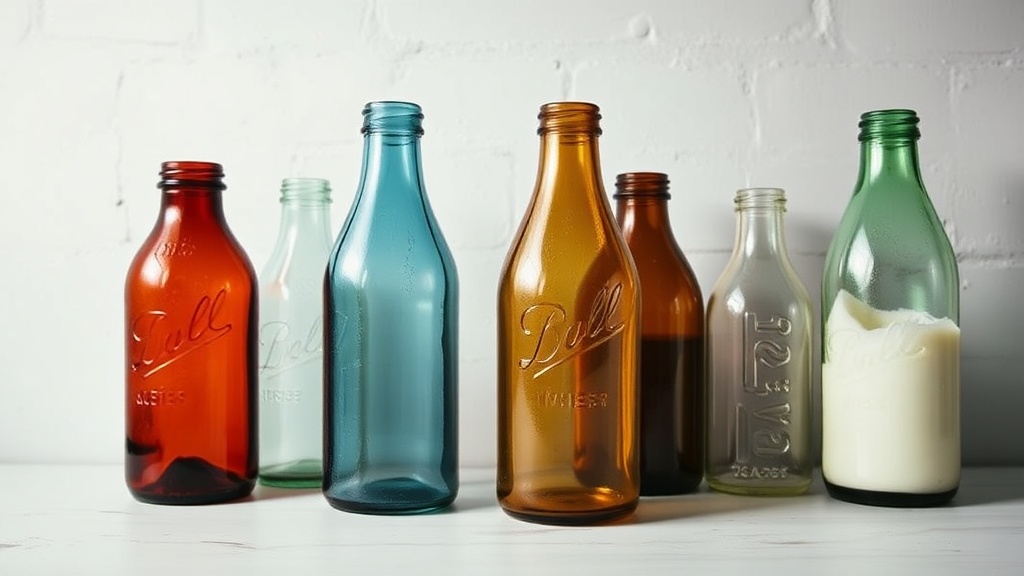
5 Vintage Milk Bottles Every Collector Dreams of Owning

The Amber Clorox Milk Bottle from H.P. Hood & Sons
Embossed Baby-Face Cream Top Milk Bottles
Pyro-Glazed Dairy Bottles with Full-Color Graphics
Early Machine-Made Milk Bottles with Slug Plates
Commemorative World's Fair and Event Bottles
Certain bottles rise above the rest. This post covers five legendary vintage milk bottles that serious collectors pursue for years—examining what makes each special, current market values, and how to spot authentic examples. Whether you're building a focused collection or simply curious about the hobby's holy grails, these pieces represent the pinnacle of dairy bottle collecting.
What Makes a Milk Bottle Truly Valuable to Collectors?
Value in milk bottle collecting comes down to four factors: rarity, condition, historical significance, and visual appeal. A common embossed quart from a 1950s suburban dairy might sell for $15 at a flea market. Meanwhile, a limited-run color-tinted bottle from a defunct creamery can command four figures at auction.
The most sought-after bottles typically feature something unusual. That might mean a prototype design never mass-produced, a commemorative issue celebrating a local event, or a color variation that only appeared for a few months. Condition matters enormously—a mint bottle with its original cap and label can be worth ten times what a cloudy, chipped example fetches.
Regional significance plays a role too. Bottles from well-documented dairies with strong local followings often outperform equally rare pieces from obscure operations nobody remembers. It's not just about scarcity—it's about the story.
The 5 Most Coveted Vintage Milk Bottles
1. The Thatcher's Common Sense Milk Jar (1880s-1890s)
Before the familiar milk bottle shape existed, Dr. Hervey D. Thatcher patented a square, ribbed jar with a metal clamp lid. These early milk containers—marketed under the "Common Sense" brand—represent the dawn of sanitary milk distribution.
Authentic Thatcher's jars feature embossed lettering on the base and distinctive vertical ribbing that helped grip the slippery glass. The zinc caps with porcelain liners rarely survive intact, making complete examples exceptionally valuable. Most examples surface in the Northeast, particularly New York and Pennsylvania where Thatcher's operation was based.
Condition challenges abound with these pieces. The thin glass walls chip easily, and decades of barn storage left many permanently stained. A clean, undamaged Thatcher's jar with its original closure can fetch $800-$1,500 depending on size and variant. The pint size appears most frequently; half-gallon and gallon sizes command premiums.
2. The Warner's Safe Remedy Milk Bottle (Early 1900s)
H.H. Warner built a patent medicine empire before branching into dairy bottles. His Rochester, New York-based operation produced milk bottles featuring the distinctive "Safe Remedy" shield logo—a marketing crossover that fascinates collectors of both categories.
These bottles represent a fascinating intersection of quack medicine advertising and dairy history. The embossed shield on the shoulder makes them instantly recognizable. Several variants exist, including some with the full Warner's name arched across the front and others with simpler lettering.
Here's the thing about Warner's bottles—they're not as rare as some newcomers assume. Thousands were produced. What separates the ordinary from the extraordinary is color. The standard aqua or clear glass examples might sell for $75-$150. But the amber and cobalt blue variants? Those can exceed $2,000 when they surface—which happens maybe once or twice a year at major shows.
The catch? Reproductions exist. Modern amber glass lacks the subtle irregularities of hand-blown originals. Study the base for pontil marks and mold seams that indicate genuine period manufacture.
3. The Alex Campbell "Kid" Bottles (1920s-1940s)
Chicago's Alex Campbell Dairy produced some of the most whimsical milk bottles ever made. Their "Kid" series featured embossed images of children—baby faces, toddlers waving, crawling infants—on round-bodied bottles that stand out in any collection.
Campbell operated multiple dairy locations throughout Illinois and Indiana, and different plants used slightly different kid designs. The "waving baby" variant remains most popular among collectors, followed by the "sleeping baby" and "crawling baby" versions. Some feature the dairy name in a circular slug plate; others have arched lettering across the shoulder.
Values vary significantly by design and condition. A common waving baby in average condition might sell for $200-$350. Rare color variations—particularly the milk glass opaque white examples—can exceed $800. The real prizes are the half-pint sizes, which were produced in smaller quantities and rarely survived.
For collectors in the Chicago area, these bottles carry special significance. Campbell's was a major local operation, and their bottles appear frequently at estate sales and antique shops throughout the Midwest. Check the National Milk Producers Federation historical archives for documentation on regional dairy operations.
4. The Brookmead Guernsey Gold Top Bottles (1930s-1950s)
Brookmead Dairy of Cleveland, Ohio, pioneered premium milk marketing with their distinctive "Gold Top" bottles. These round, heavy-bottomed quarts featured embossed Guernsey cow heads and rich amber or deep green glass that looked nothing like competitors' clear containers.
The color alone made them memorable. Brookmead used glass tinted with mineral additives that supposedly protected milk from light degradation—an early example of health-focused packaging. Whether the science held up mattered less than the visual impact. These bottles glowed on doorstep deliveries.
Several variations exist, and serious collectors pursue them all. The standard Guernsey head design came in multiple sizes from half-pint to half-gallon. Limited commemorative versions celebrated Cleveland sporting victories and local events. A few experimental shapes never saw wide distribution.
Condition is critical with Brookmead bottles. The colored glass hides cloudiness better than clear examples, but it also makes damage harder to spot. Check carefully for hairline cracks—common in the thick base where thermal stress accumulated. A pristine amber quart with strong embossing typically sells for $400-$700. Green examples command 20-30% premiums due to lower survival rates.
5. The Carnation Milk "Contented Cow" Bottles (1940s-1960s)
National brands rarely produced truly collectible bottles—mass production typically meant standardized, boring designs. Carnation broke that pattern with their "Contented Cow" series featuring Elsie the Borden Cow's competitor in cheery painted-label bottles that have aged beautifully.
Unlike embossed bottles where the design is molded into the glass, Carnation used pyroglazed ceramic labels that fused permanently to the surface. The colorful pastoral scenes—green pastures, blue skies, that iconic contented expression—remain vivid on well-preserved examples. Poor storage destroyed many; heat and moisture caused the ceramic to flake or fade.
These bottles offer an accessible entry point for newer collectors. They're common enough that examples surface regularly, but condition-sensitive enough that truly pristine pieces still command respect. A typical painted-label Carnation quart sells for $40-$80. The sought-after half-gallon "tallboy" format with full-wrap pastoral scenes can reach $200-$300 in excellent condition.
Carnation's documentation is extensive—the company maintained detailed records archived at HistoryLink and other regional repositories. This provenance helps collectors authenticate variants and understand production timelines.
What Should You Look for When Buying Vintage Milk Bottles?
Authentication matters more than ever as reproductions improve and online sales obscure physical inspection. Start with the basics: examine base markings for manufacturer codes and date ranges, check mold seams for consistency with claimed production periods, and study the glass itself for age-appropriate characteristics.
Here's a practical comparison of authentication factors across different price tiers:
| Feature | Budget Bottles ($20-$75) | Mid-Range ($100-$400) | Premium ($500+) |
|---|---|---|---|
| Condition Standard | Minor clouding acceptable, small flakes common | Clear glass, minimal wear, no chips | Near-mint to mint, original caps preferred |
| Embossing Quality | Readable but possibly worn | Sharp, well-defined lettering | Crisp details, full depth |
| Color/Variant | Standard clear or aqua | Unusual tints, limited colors | Rare colors, prototype designs |
| Documentation | Generally unavailable | Period advertising sometimes included | Original crates, caps, paper labels common |
Worth noting: provenance adds value. A bottle with documented history—original dairy paperwork, period photographs showing the bottle in use, or estate sale records from the family of a former dairy worker—carries premiums of 25-50% over undocumented examples. Keep records of your purchases.
Where Do Collectors Find These Bottles Today?
The hunt happens across multiple channels. Estate sales in former dairy regions—Wisconsin, New York, Pennsylvania, Ohio—still produce fresh discoveries. Farm auctions occasionally liquidate decades of barn storage. Dedicated bottle shows bring dealers and collectors together for specialized trading.
Online marketplaces dominate volume but require caution. eBay lists thousands of milk bottles, but descriptions vary wildly in accuracy. Reproductions get listed as vintage. Condition gets exaggerated. Photos hide flaws. The smart approach? Buy from established dealers with return policies, or build relationships with sellers who specialize in dairy bottles specifically.
That said, some of the best finds still happen accidentally. Flea market vendors who don't recognize a rare variant. Garage sales where old bottles serve as pencil holders. Thrift stores pricing everything at $3 regardless of actual value. These discoveries keep the hobby exciting—there's always the chance that the next ordinary-looking bottle might be something special.
For research and community connections, the Federation of Historical Bottle Collectors maintains extensive reference materials and regional chapter contacts. Their publications document new discoveries and authentication techniques that help collectors avoid costly mistakes.
The five bottles profiled here represent aspirational targets—not every collection needs these pieces to be meaningful. But understanding what makes them special helps collectors recognize quality, spot undervalued opportunities, and appreciate the rich history contained in every vintage milk bottle. Happy hunting.