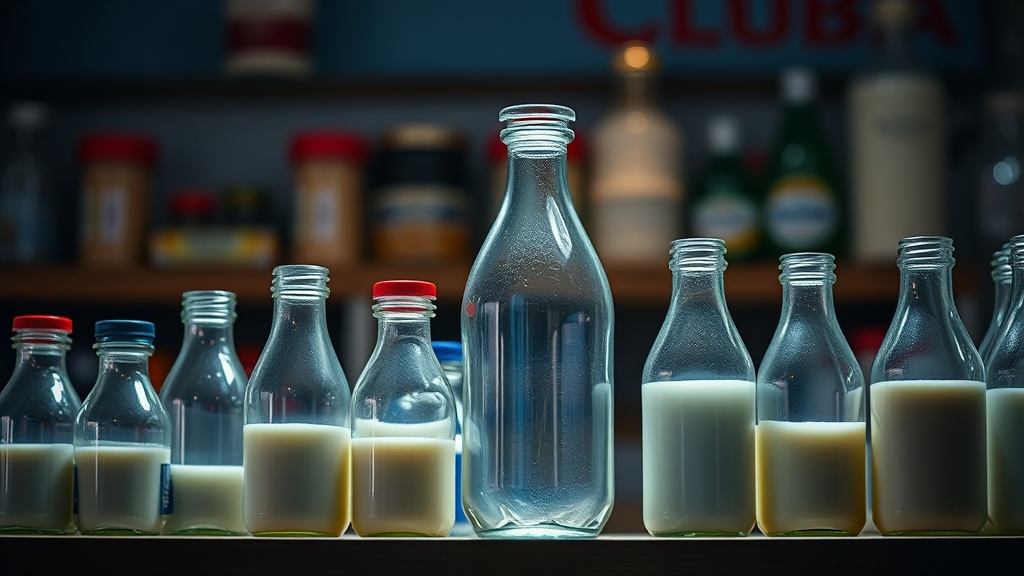
Build a Milk Bottle Inventory You'll Still Trust Five Years From Now

The National Park Service treats photography and inventory as formal museum-record tasks, not optional extras, and that should tell collectors something right away: a bottle collection stops being a collection the minute you can't identify what you own. This guide walks through a practical way to catalog milk bottles so buying, selling, insurance, and plain old memory don't depend on scribbles, shelf guesses, or a phone camera roll full of unnamed images.
What should you record for every milk bottle?
A collector's spreadsheet with six rows labeled quart bottle, nice embossing, and maybe local dairy isn't a system; it's wishful thinking. You need enough detail to separate one bottle from the next, enough condition language to remember why one piece was better than another, and enough location data to find the thing again after you reshuffle a shelf. The best model is borrowed from institutions, not because your basement is a museum, but because museum recordkeeping solves the same problem at a bigger scale. The National Park Service Museum Handbook, Part II treats identity, cataloging, inventory, and photography as connected jobs. That's the right instinct for a home collection too.
| Field | Why it matters | Example |
|---|---|---|
| Inventory ID | Ties the bottle to photos, notes, and storage | MB-0247 |
| Size and form | Lets you sort fast | Quart, round shoulder |
| Dairy or distributor text | Supports attribution | Embossed local dairy name and city |
| Decoration type | Affects care and value | Embossed glass with red ACL panel |
| Closure and finish | Helps with dating | Crown top |
| Condition | Separates the keeper from the filler piece | Light base wear, tiny lip nick, interior haze |
| Acquisition details | Builds provenance and cost history | Flea market, March 2026, $28 |
| Storage location | Keeps the record usable later | Shelf B2, right side |
If you want one opinionated rule here, make it this: don't mix identification with storytelling. Put hard facts in dedicated fields, then use a short notes field for things like unusual slug plate wear, a seller's story, or a reminder that the bottle glows under black light. Facts sort cleanly; stories don't.
How do you number bottles so the system doesn't fall apart?
The numbering scheme needs to survive growth, not impress anybody. Start with a simple prefix and a running number: MB-0001, MB-0002, MB-0003. Don't bake category names, city codes, shelf numbers, or dates into the ID. Those details change. IDs shouldn't. If you later move a Chicago dairy quart from the dining-room cabinet to a plastic tote, the record still works because the ID stays put while the location field changes.
- Assign the next unused number the day the bottle comes in.
- Put that number in your spreadsheet or database before you clean, photograph, or display the bottle.
- Add the same ID to every image filename and every condition note.
- If you tag storage boxes or shelf edges, include the bottle ID there too.
If future-you can't match the photo to the glass in ten seconds, the record isn't finished.
Some collectors like temporary intake numbers for estate-sale hauls. That's fine, but convert them fast. Temporary systems have a bad habit of becoming permanent (and messy) the second life gets busy.
How should you photograph milk bottles for your catalog?
Catalog photos don't need to look cinematic. They need to answer questions. Can you read the embossing? Can you see the ACL color accurately? Can you spot haze, scratches, bruises, and repairs? That's the bar. Take the glamour shot after that if you want it.
A quick photo routine that actually works
- Photograph the front straight on.
- Photograph the back straight on.
- Photograph both side profiles if the shape matters.
- Photograph the base so maker marks, seam details, and wear are visible.
- Photograph the lip or finish from above if there's damage or an unusual closure.
- Photograph any standout flaw close up: crack, sick glass, stain, deep scratch, or chipped embossing.
Use a plain background and even light. Window light can work for a fast session, but diffuse it and keep the bottle stable so reflections don't wipe out lettering. A phone is fine if you tap to focus and don't let auto-processing turn clear glass into a glowing blur. I like one neutral reference shot with a small ruler or measurement card nearby for size, then tighter detail shots without clutter.
Be honest with the camera. Don't crank contrast until weak embossing looks stronger than it is, and don't smooth out wear with editing. Buyers notice. Insurance adjusters notice. You will notice too, six months later, when the photo says mint and the shelf says otherwise.
Where should the files live, and what should you name them?
A good inventory dies faster from bad filenames than from bad intentions. IMG_4821 means nothing. MB-0247-front means something. The Library of Congress personal archiving guidance pushes descriptive names, organized folders, and more than one copy for a reason: digital records are only helpful if you can locate and trust them later.
Keep the folder structure boring:
- Main folder: Milk-Bottle-Collection
- Subfolders: Inventory, Photos, Receipts, Research, Insurance
- Inside Photos: one folder per inventory ID or one folder per acquisition batch if the collection is still small
My preferred filename pattern is simple: MB-0247-front.jpg, MB-0247-base.jpg, MB-0247-damage-lip.jpg. If you shoot edited and unedited versions, say so in the name. If you revise a record, keep the same ID and add a date to the document version rather than renumbering the bottle itself.
Backups matter here more than people admit. Keep one local copy, one cloud copy, and one extra copy on a drive that isn't sitting next to the shelf it documents. Receipts, appraisal letters, screenshots of sold comparables, and photographs of grouped displays belong in the same record universe, not scattered across email, text messages, and random downloads.
When is a condition note worth the trouble?
Every bottle deserves a condition note, but not every bottle needs a novella. Common pieces can get a one-line record. Scarcer examples should get fuller notes, especially if paint, pyro, embossing sharpness, or local interest are part of the value story. The note should tell you what changed, what stands out, and what needs gentler handling next time.
- Mint or near mint: reserve this for bottles that really earn it.
- Base wear: say light, moderate, or heavy.
- Haze: note whether it appears internal, surface-level, or patchy.
- Damage: specify lip nick, bruise, crack, flake, or chip instead of saying minor issues.
- Decoration loss: estimate where and how much if ACL or applied color is affected.
Handling should match the note. The Canadian Conservation Institute's basic care guidance for glass is blunt in the best way: use clean hands, support glass with both hands, and don't lift it by weak points. That's museum language for a collector problem everyone recognizes - one old repair, one slippery grab, and the inventory becomes an obituary.
What can you skip when time is short?
You don't need a two-hour intake ritual for every farm-auction find. You do need a minimum standard. When time is tight, do the sixty-second version the same day the bottle arrives:
- Assign the next inventory ID.
- Take front, back, and base photos.
- Record dairy name or embossing text, size, and one-line condition.
- Add purchase source and price.
- Place it in a recorded shelf or box location.
That's enough to prevent orphan bottles and mystery photos. Later, when you have the breathing room, add decoration details, date estimates, local history notes, and comparable sales. The mistake isn't starting small; it's pretending you'll remember everything until some better day. You won't. None of us do.
Pick one shelf tonight and do it straight through — ID, photos, notes, backup. By the time you reach the last bottle, you'll have a collection that can speak for itself even when you aren't standing there to explain it.