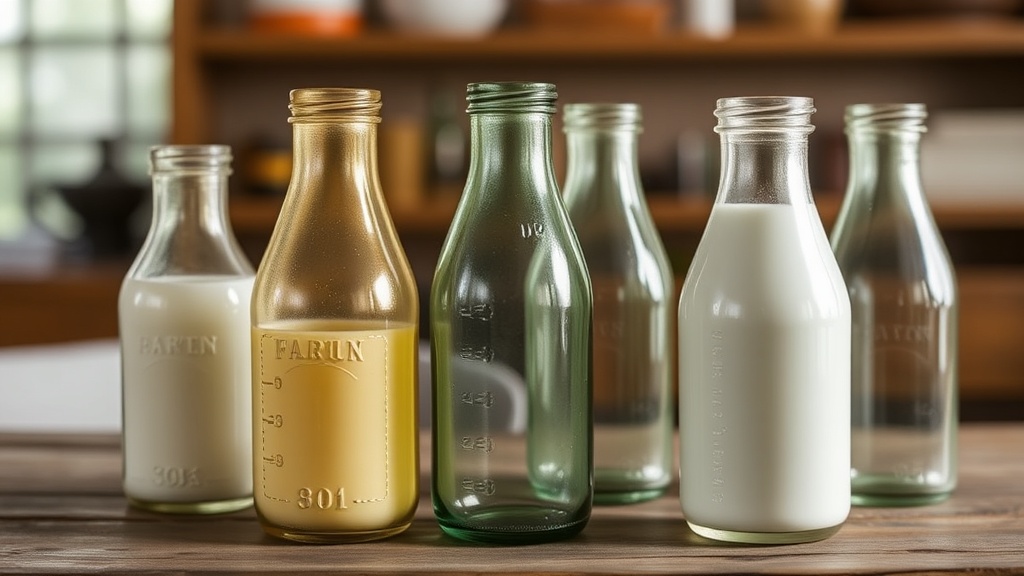
Evaluating Rare Mid-Century Pyroglaze Milk Bottles from Small Midwest Dairies

Ever wonder why that one brightly colored milk bottle at the flea market costs ten times more than the one sitting right next to it? It isn't just about the "pretty picture" on the front. We're talking about Applied Color Labeling (ACL)—commonly called pyroglaze—bottles that defined the mid-century dairy industry before wax cartons took over the world. These pieces are a snapshot of local commerce, mid-century graphic design, and post-war social values. If you're hunting for gems in the Midwest, specifically around the Chicago suburbs and rural Illinois, you need to know what separates a common five-dollar find from a true three-figure treasure.
The technical side of this process is quite fascinating, actually. Before the 1930s, if a dairy wanted their name on a bottle, they had to have it embossed into the glass during the molding process. That meant ordering heavy, expensive molds. But Applied Color Labeling changed the whole scene. Dairies could buy generic bottles and then have their branding silk-screened on. They used a slurry made of ground glass, metallic oxides, and a binder. After the paint was applied, the bottles went into a massive annealing oven called a lehr. At 1200 degrees, that slurry didn't just dry; it melted and fused with the glass of the bottle. This created a permanent, raised label that could withstand the high-speed washing machines of the era. Well, it was supposed to, anyway.
Why does the number of colors on a label matter?
Most small dairies were careful with their pennies. They'd pick one color—usually a bright orange or a fire-engine red—and stick with it for every bottle in the fleet. Why? Because every extra color meant another pass through the kiln and more money out the door. If you find a bottle with two colors, perhaps a nice forest green paired with a crisp white, you're looking at something that cost the dairy significantly more to produce. These multi-color bottles were often reserved for special "premium" lines of milk or for dairies trying to project a more modern image in a crowded market.
Three-color bottles are the true prizes of the 1950s era. They're rare because most local operations just couldn't justify the expense of a triple-firing. When you see a tri-color label from a tiny outfit in rural Illinois or Indiana, you're looking at a serious marketing push that probably didn't last long. Collectors hunt for these because the graphics are often more detailed and vibrant. The cost of pigments played a role too—blues and purples were more expensive and harder to stabilize in a 1200-degree kiln than standard oranges or reds. If you spot a mid-century bottle with a stable, bright blue label, don't let it sit on the shelf. It's a technical marvel from a time when industrial chemistry was still figuring out high-heat glass paints.
How do you verify the rarity of a small-town dairy name?
Scarcity isn't just about how many bottles were made; it's about how many survived the decades. The big players like Borden or Bowman had hundreds of thousands of bottles in circulation. You'll find those at every antique mall in the country. But the small "mom and pop" dairies that popped up after the war often vanished within a few years. Maybe they were bought out by a regional conglomerate, or they just couldn't keep up with the shift to grocery store sales. Bottles from these short-lived entities are your primary targets. You'll want to check things like the Society for Historical Archaeology's database or local historical society records to see exactly how long a dairy was active.
If a dairy was only around for two or three years in a town with a population of five hundred, those ACL bottles are going to be incredibly tough to find. Many were simply thrown away or smashed once the dairy closed. In the Midwest, the "Milk Shed" around Chicago is a goldmine for this. Think about towns like Elgin, Woodstock, or even further out toward Rockford. Each of these areas had dozens of tiny distributors that all went through the ACL phase before the industry consolidated. Finding a bottle from a dairy that only existed for a single calendar year is the kind of win that makes the whole hobby worth it. You aren't just buying glass; you're buying a piece of a town's history that was almost erased.
Can the graphics on the back panel change the bottle's value?
Don't just look at the front of the bottle. The back panel was the "social media" of its day. Dairies used this space to push safety messages, health tips, or even recipes for cottage cheese and chocolate milk. Some of the most sought-after bottles feature graphics aimed at kids—think "Safety First" slogans showing children crossing the street or "Drink Milk for Health" messages featuring athletes. These pieces have a cross-over appeal with other collectors, like those who focus on 1950s advertising or safety memorabilia. This extra demand naturally pushes the price higher than a bottle with a blank back or a simple name repeat.
"I've seen too many beginners get taken for a ride on common Bowman bottles just because they have a little orange paint on them. Don't be that person. Look for the back panel graphics—that is where the real story lives." — Maya Garcia
Then there are the "holiday" bottles. Some dairies would run a short batch of bottles with Christmas or Easter graphics on the back. Since these were only used for a month or two out of the year, their survival rate is much lower than the standard stock. A bottle with a bright red Santa Claus on the back can easily double in value compared to the exact same dairy's standard label. For more details on the marks you might find on the bottom of these treasures, check out the guides at Glass Bottle Marks. Knowing who made the bottle—whether it was Owens-Illinois or Thatcher Glass—can help you date the piece to the exact year it was fired.
By the late 1940s and early 1950s, the industry moved away from the traditional round bottles to square ones. This wasn't just a design choice; it was a space-saving move for both delivery trucks and the new electric refrigerators that were taking over American kitchens. If you find an ACL label on a round bottle, it's usually from that transition period between 1940 and 1946. These are transitional pieces that bridge the gap between the "old school" embossed era and the "modern" pyroglaze era. They feel different in the hand—heavier, more substantial—and they usually carry a slight premium because they represent the very first wave of the pyroglaze revolution.
Here is the honest truth that every collector needs to hear: dishwashers are the enemy. The harsh detergents and high heat of modern appliances act like sandpaper on that fired-on glass paint. Collectors call this "hazing," "fading," or "dishwasher death." A bottle that would be worth a hundred dollars in mint condition drops to five bucks if the paint is scratched, dull, or chalky. Always run your thumb over the label when you're at a flea market. It should feel smooth and look glossy under the light. If the paint feels rough or looks like it has been scrubbed with an SOS pad, put it back. You can't fix it, and it will only look worse over time. Keep your eyes peeled for those bright, glossy colors that look like they just rolled out of the lehr yesterday—that is where the value truly lies.