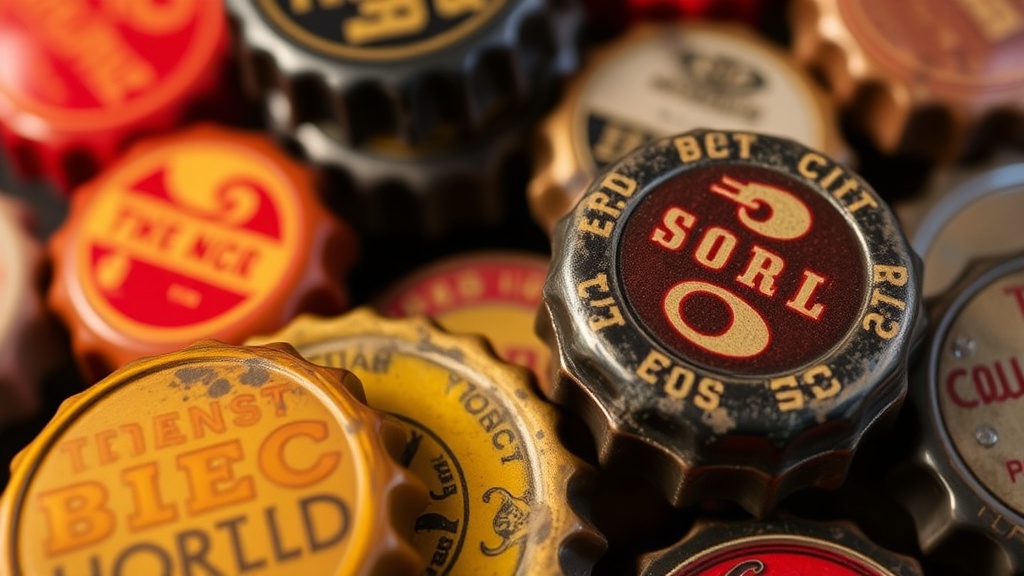
Identifying Authentic Vintage Metal Bottle Caps

What Makes a Vintage Bottle Cap Authentic?
This post covers the specific physical characteristics, material compositions, and manufacturing marks that distinguish an authentic vintage metal cap from a modern reproduction or a later replacement. Understanding these nuances is vital for collectors because the wrong identification can lead to overpaying for a common item or missing a genuine rarity in a sea of modern replicas.
When you look at a vintage cap, you aren't just looking at a piece of metal; you'text looking at a time capsule of industrial manufacturing. Modern caps are often perfect, uniform, and lack the character found in older pieces. An authentic vintage cap—whether it's a crown cork or an earlier style—will show signs of the era it originated from. This includes specific types of oxidation, the way the metal was crimped, and the presence of certain printing techniques that simply weren't available during the early 20th century.
One of the first things to check is the printing method. Most high-end vintage caps used lithography, which allowed for vibrant, multi-colored designs. If you see a cap that looks "too perfect" or uses modern digital printing styles, it's a red flag. Genuine lithographed caps often have a slight texture or a very subtle layer of ink that feels different from the metal underneath. If the design looks like it was printed with a modern inkjet printer, you're likely looking at a modern novelty item rather than a collectible piece.
How Can You Spot a Reproduction Cap?
Distinguishing a reproduction from an original requires a keen eye for detail and a bit of tactile investigation. One of the most common ways to spot a reproduction is by examining the edges and the crimping. In the early days of mass-produced bottle caps, the machines used to seal the bottle were less precise than today's highly calibrated equipment. This means you might see slight irregularities in the way the metal grips the bottle neck. A perfectly smooth, machine-perfect crimp on a cap that claims to be from 1920 is a major warning sign.
The material itself is another giveaway. Modern reproductions often use much thinner, more lightweight aluminum or high-grade steel that lacks the weight and "feel" of older tin-plated steel. If you hold a cap and it feels incredibly light or flimsy, it might not be the vintage piece you think it is. You should also look at the oxidation. Real age-related patina looks deep and integrated into the metal. If the "rust" looks like it was painted on or if the metal has a uniform, bright sheen despite being labeled "vintage," proceed with caution.
For more technical details on metal-working history, the Britannica entry on metalworking provides excellent context on how manufacturing evolved. Another way to verify age is to look for specific branding. Many companies changed their logos frequently. If a cap features a brand logo that didn't exist in the year the cap claims to be from, you've found a discrepancy. This kind of research is what separates a casual observer from a serious collector.
Why Does the Condition of the Metal Matter?
The condition of a cap affects its value and its place in a collection. Collectors often debate whether a "perfect" cap is better than one with natural aging. While a pristine, unoxidized cap is rare, many collectors prefer a piece that shows a bit of authentic character. This doesn't mean you want a rusted, falling-apart cap, but a light patina can actually prove authenticity. It shows the metal has reacted with the environment over decades, which is much harder to fake than a pristine look.
| Feature | Authentic Vintage | Modern Reproduction |
|---|---|---|
| Printing | Lithographed, textured | Digital, smooth, flat |
| Metal Weight | Heavier, tin-plated steel | Light, thin aluminum |
| Crimping | Slightly irregular | Perfectly uniform |
| Patina | Natural, deep oxidation | Surface-level or painted |
It is also worth noting that the way a cap interacts with the bottle' {the glass part} can tell a story. An authentic cap will often have a slight indentation or a fit that matches the specific geometry of the vintage bottle it was designed for. If you're trying to verify a set, ensure the cap and the bottle are historically compatible. A modern cap might fit a vintage bottle, but it won't have the historical integrity required for a high-value display.
When you are out at a flea market or browsing online, always bring a magnifying glass. Looking at the fine print on the underside or the rim can reveal much more than a cursory glance. Often, the manufacturer's name or a batch number is stamped into the metal. These small details are the DNA of the object. If the stamp is blurry or looks like it was etched with a laser, you're likely looking at a fake. Authentic stamps from the early-to-mid 20th century have a certain "bite" to them that reflects the heavy-duty stamping processes of the time.
Building a collection of caps is as much about the hunt for information as it is about the hunt for the objects themselves. You'll find that as you learn more about the metallurgy and the printing history of the era, your ability to spot a fake improves exponentially. Don't be afraid to ask questions or even ask a seller to let you examine a piece under better light. A reputable seller will understand that collectors need to verify their finds.