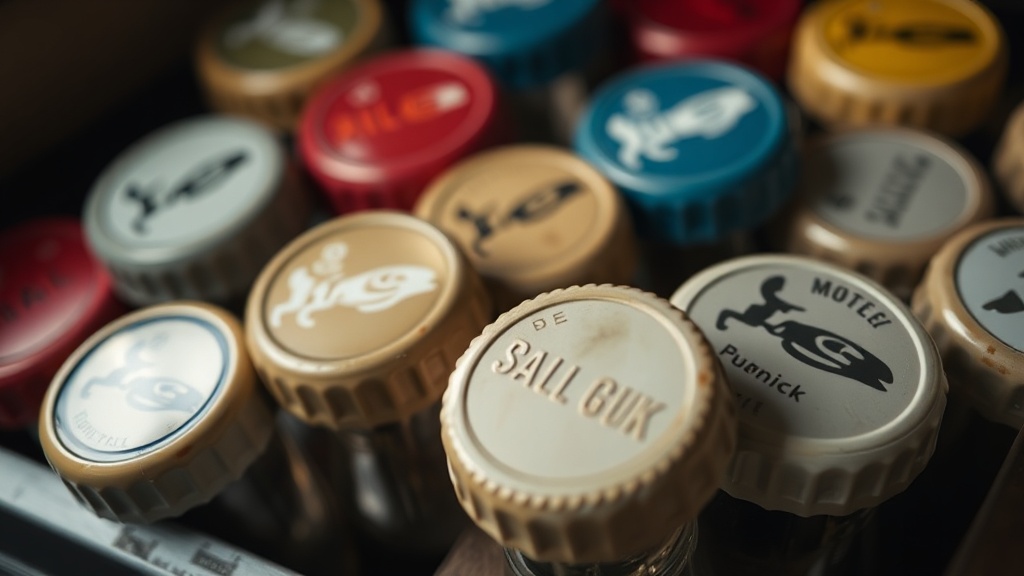
Identifying Authentic Vintage Milk Bottle Caps

In this guide, you'll learn to distinguish between genuine vintage metal caps and modern reproductions.
Identifying a true antique metal cap requires more than just a quick glance; it demands an eye for detail, a touch for texture, and a basic understanding of metal aging. Collectors often struggle with this because modern-day "distressed" items look deceptively similar to the real deal. You'll learn how to check for patina, examine the crimping, and recognize the specific manufacturing marks that separate a mid-century collectible from a cheap contemporary copy.
The world of small-scale metal collectibles is full of nuances. Whether you are looking at a simple flat cap from a local dairy or a more complex crown cap, the history is etched into the metal itself. If you don't know what to look for, you might end up paying a premium for something that was actually made last Tuesday. We're going to break down the physical traits that define authenticity.
What makes a vintage metal cap different from a modern one?
The first thing you'll notice is the patina. Real age doesn't just mean "rust"—it means a subtle, uneven oxidation. Modern-day reproductions often use a chemical wash to create a fake aged look, but this usually looks too uniform. A true vintage cap has had decades to interact with the air and moisture. You'll see tiny pits, micro-scratches, and a depth of color that a factory-applied spray-on rust just can't mimic.
Another giveaway is the weight and the material. Older caps were often made from heavier-gauge tin or steel. If you hold a cap and it feels incredibly light or thin—almost like a modern soda cap—it's a red flag. Also, pay attention to the crimping. Historically, the way the metal was folded or pressed onto the glass neck was much more mechanical and less precise than today's automated high-speed lines. Look for slight irregularities in the way the lid sits on the rim of the bottle.
Common Types of Vintage Caps
Collectors generally run into three main categories of metal closures for milk bottles. Understanding these will help you categorize your finds more effectively:
- Flat Caps: These are the simplest style, often used for smaller glass bottles. They are usually thin metal disks that sit on top of the rim.
- Crown Caps: While more common in soda, certain dairy-related closures used a similar crimped edge to secure the lid.
- Screw-On Metal Caps: These often have internal threading and were used for larger-sized bottles intended for longer storage.
If you're looking for historical context on how these manufacturing standards changed, the Smithsonian Institution provides incredible resources on the history of American food packaging and industrial design.
How can I tell if a cap has been chemically aged?
This is the most common way collectors get tricked. A "distressed" look can be faked easily. To test this, look at the edges. If the "rust" is perfectly distributed even in the deep grooves of the lettering, it’s likely a chemical application. Real oxidation follows the path of least resistance and tends to cluster in certain areas. If you see a perfectly even layer of brown across the entire surface, be skeptical.
You can also use a magnifying glass (a jeweler's loupe is a great investment) to check for microscopic wear. A real vintage cap will have tiny scratches from being handled or moved over the decades. If the surface is perfectly smooth under the patina, it's a fake. Also, check the underside. The inside of a vintage cap should show the same signs of age as the outside. If the top is rusty but the inside is shiny, clean, and looks brand new, you're looking at a modern piece that's been treated to look old.
Where should I store my metal caps to prevent damage?
Once you've identified a genuine piece, you want to make sure it stays that way. Metal is a reactive material. If you keep your collection in a damp basement or a humid room, the oxidation will accelerate, and you might lose the fine details of the embossing. Humidity is the enemy of any metal collection. Even if you love the "rusty look," uncontrolled oxidation can actually eat through the metal and destroy the piece entirely.
The best way to preserve these small items is to keep them in a controlled environment. A display case with a silica gel packet (those little "do not eat" packets) can help absorb excess moisture. If you are displaying them outside of a case, ensure they aren't in direct sunlight or near a heat source, as temperature fluctuations can cause the metal to expand and contract, potentially affecting the patina. For more on the preservation of industrial artifacts, the Library of Congress has extensive archives on the evolution of consumer goods.
Keep in mind that a little bit of surface oxidation is part of the charm, but you shouldn't let it go unchecked. If you notice the metal starting to flake or turn into a fine powder, it's time to move that piece into a sealed environment. Collectors often use archival-grade plastic bins for long-term storage, but be sure the metal is completely dry before putting it away to avoid any unexpected chemical reactions.
The Collector's Checklist
Before you buy a piece at a flea market or an estate sale, run through this quick mental checklist:
- Is the weight consistent with the era? (Is it too light?)
- Is the patina uneven? (Real age isn't uniform.)
- Are there micro-scratches? (Modern fakes are often too smooth.)
- Does the underside match the top? (The inside should show age too.)
- Is the crimping imperfect? (Hand-made/old-world machines aren't perfect.)
By paying attention to these small details, you'll build a collection that is both authentic and historically significant. Don't be afraid to ask questions or even ask a seller to let you feel the weight of a piece. In this niche, the tactile experience is just as important as the visual one.