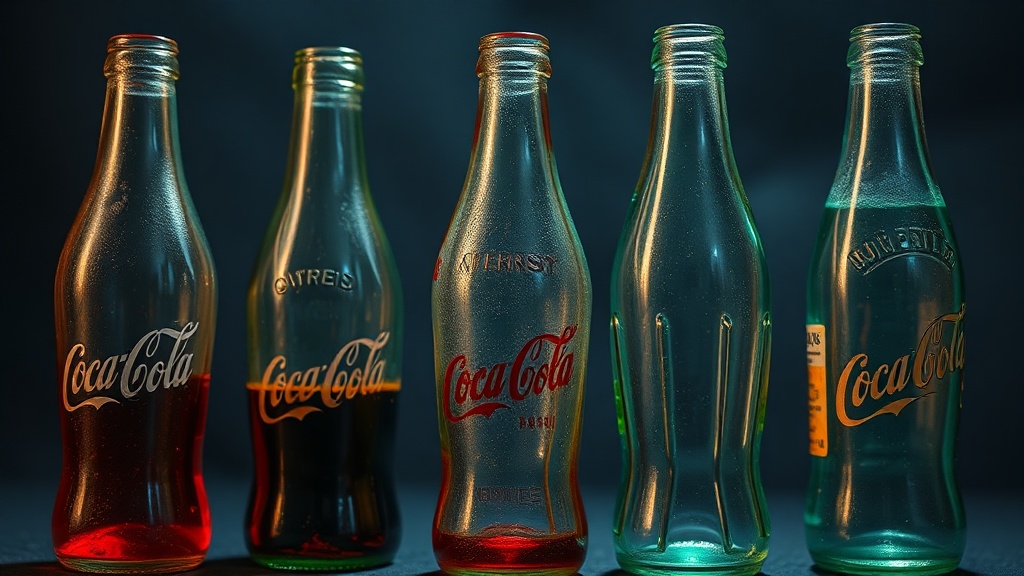
4 Remarkable Soda Bottles That Tell a Story of the Great Depression

The Rise of Economy Glass
The Thrift-Driven Design Shift
Commonality Over Complexity
The Legacy of Regional Bottlers
A collector in a dusty corner of an Ohio antique mall pulls a heavy, dark amber glass bottle from a wooden crate. It isn't the standard bright green or clear glass you see in modern soda displays; it’s a somber, utilitarian shape that feels weighted by history. This specific bottle—a product of the 1930s—wasn't designed for luxury. It was designed for a world where every penny mattered. This post looks at four specific soda bottles that reflect the economic realities of the Great Depression, focusing on their design shifts, material changes, and the stories they tell about American survival.
Why did soda bottle designs change during the 1930s?
Bottle designs shifted toward cost-saving measures, such as thinner glass and standardized shapes, to combat the extreme economic pressures of the Great Depression. During this era, manufacturers couldn't afford the ornate, heavy-duty glass-blowing techniques used in the late 1800s. They needed efficiency. You'll notice a move away from the heavy, embossed "apothecary" style toward smoother, more mass-produced shapes that could be easily recycled or reused in local bottling plants.
The economic downturn forced a pivot in the beverage industry. Companies like Coca-Cola and regional soda distributors had to keep prices low to ensure their customers could still afford a treat. This meant less decorative glass and more functional, streamlined production. It’s a fascinating period for collectors because the "imperfections" in the glass—the slight thinness or the lack of heavy embossing—are actually markers of the era's economic struggle.
If you're looking for these pieces, keep an eye out for the transition from hand-blown characteristics to machine-made consistency. It's a subtle shift, but once you see it, you can't unsee it.
1. The Coca-Cola "Straight-Sided" Transitionals
While the contour bottle is the most famous icon of the brand, the years surrounding the Depression saw various iterations of the "straight-sided" glass. During the early 1930s, the production of glass was highly scrutinized for cost. Some versions of the Coca-Cola bottles from this era lack the deep, heavy "hobbleskirt" base of the earlier 1915 models. Instead, they feature a more streamlined, efficient base designed to save on raw materials.
These bottles are often harder to identify at a glance because they look "plain." However, for a collector, that plainness is the point. It represents a time when even a global giant had to tighten its belt. These bottles often show more frequent signs of wear or "shelf wear" because they were circulated heavily in local soda fountains during a time when a nickel was a significant expense.
2. The Regional Ginger Ale "Economy" Bottles
Regional ginger ale brands often suffered the most during the 1930s. Many of these small-scale bottlers had to switch to much thinner glass to keep the product affordable for local communities. If you find a ginger ale bottle from this era that feels unusually light in the hand, you might be looking at a true Depression-era piece.
These bottles often lack the elaborate embossed logos found in the 1920s. Instead, you might see a simple, single-color text or even a completely unbranded bottle that was meant to be reused by local distributors. This was common practice to keep the overhead low. It's a stark contrast to the highly branded, decorative bottles of the previous decade.
How much are Depression-era soda bottles worth?
The value of Depression-era soda bottles depends heavily on the rarity of the brand and the physical condition of the glass, particularly the presence of the original cap or any intact embossed lettering. Most common regional bottles from this era might only fetch $15 to $30, but rare brand-name transitions can go much higher.
When assessing value, don't forget that "condition" is a subjective term in the collecting world. A bottle with a small chip might be a deal-breaker for a high-end collector, but it still holds historical value. For those just starting, it's wise to check the history of glass manufacturing to understand what makes a specific shape or thickness unique to that decade.
Here is a quick breakdown of what to look for when estimating value:
| Feature | High Value Indicator | Low Value Indicator |
|---|---|---|
| Embossing | Deep, crisp, unweathered text | Faded, shallow, or worn smooth |
| Glass Color | Rare colors (amber, cobalt, deep blue) | Common clear or standard green |
| Condition | No chips, no "sick" glass (cloudiness) | Heavy scratches or structural cracks |
| Brand | National brands or defunct local brands | Generic, unbranded soda bottles |
3. The "Clear Glass" Soda Experiment
During the 1930s, many bottlers moved toward clear glass to save on the cost of colored glass pigments. While green and amber were standard, clear glass became a way to signal "purity" and "honesty" to a struggling public. This was a clever marketing tactic—it made the product look clean and transparent during a time of massive social uncertainty.
Finding a clear glass soda bottle with a distinct, unadorned shape can be a real treat. It's a piece of history that shows how marketing and economics worked together. If you're interested in the technical side of how these were made, reading about rare variations of antique soda bottle finishes can help you distinguish a true 1930s piece from a later reproduction.
4. The "Small-Batch" Local Soda Bottles
Finally, we have the small-batch, local soda bottles. These are the "unsung heroes" of the Depression era. In many small towns, the local soda maker was the only source of carbonated drinks. Their bottles were often extremely utilitarian—simple shapes with minimal branding to keep costs down for the local farmer or laborer. These bottles are the true "storytellers" because they represent the local economy's resilience.
These bottles are often the hardest to find because they weren't part of national-scale distribution. They were meant to be returned, refilled, and reused. This high turnover rate means many of these bottles were broken or lost to history, making a well-preserved specimen quite a find for a specialist.
Can you identify a genuine 1930s bottle?
Yes, you can identify a genuine 1930s bottle by looking for specific indicators like machine-made seams, thinner glass-walls, and the absence of heavy, ornate embossing found in the pre-Depression era.
One of the best ways to verify a bottle is to look at the base. By the 1930s, the transition to machine-made bottles was nearly complete. You'll often see a more consistent, circular base compared to the irregular, hand-blown bases of the late 19th century. Also, look at the "lip" or the finish of the bottle. The way the glass is shaped at the top tells you a lot about the technology used. If the bottle has a very smooth, uniform finish, it's likely a product of the industrial-scale production that defined the 1930s.
I always recommend taking a close look at the seam. A machine-made bottle will have a very straight, clean seam running up the side. If the seam is uneven or has "bubbles" in it, you might be looking at an older, hand-blown piece or a much later reproduction. It's worth the extra time to inspect these details—it's the difference between a common piece of glass and a historical artifact.
If you find yourself questioning the authenticity of a piece, remember that even small details matter. A quick search through the Library of Congress archives for historical advertisements from that era can often provide context for the brands and bottle styles that were actually in circulation at the time. It adds a whole new layer to the collecting experience.
Before you spend a lot of money on a potential find, make sure you use a rapid bottle assessment guide to check for any immediate red flags. It'll save you a lot of heartache in the long run.