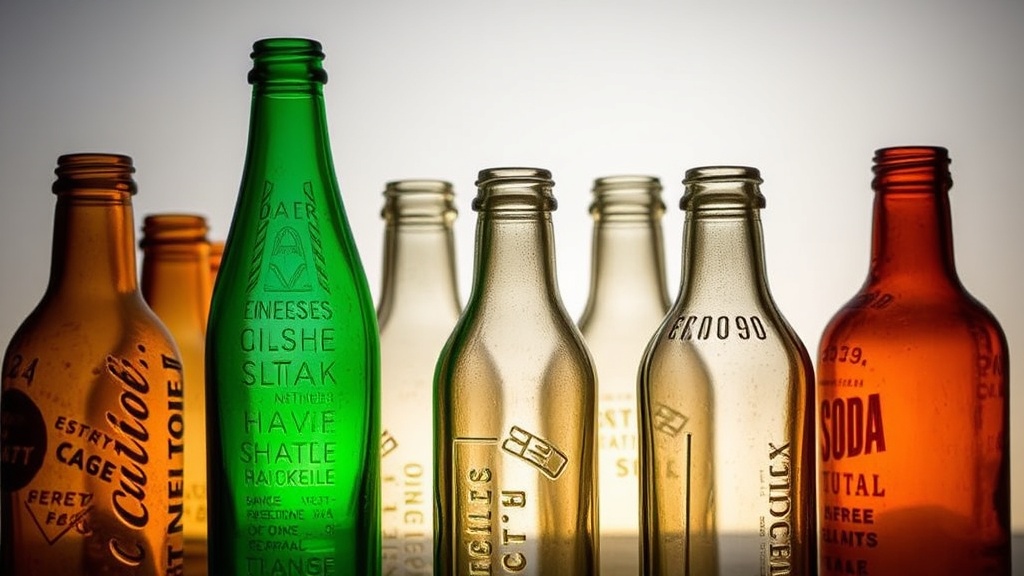
7 Rare Variations of Antique Soda Bottle Finishes

The Classic Molded Lip
Early Crown Finish Variations
The Beveled Edge Detail
Smooth Lip Transitions
Embossed Rim Textures
The Tapered Neck Style
Industrial Machine-Pressed Finishes
You’re holding a heavy, amber-colored glass bottle. It looks like a standard soda bottle from the 1920s, but when you look closely at the top, the rim isn't smooth. It has a distinct, jagged texture that changes the entire value of the piece. This is a finish variation. Understanding the difference between a standard crown top and a rare embossed finish can be the difference between a $10 find and a $500 centerpiece. We're looking at the specific structural details of the bottle neck—the part where the cap meets the glass—to identify high-value rarities.
What is a Bottle Finish?
A bottle finish is the specific shape and design of the glass at the very top of the neck. It dictates how a bottle is sealed, whether by a cork, a cap, or a mechanical device. For collectors, the finish is a primary indicator of a bottle's age and manufacturing method.
In the early days of soda production, glassblowers didn't have the standardized machines we see today. They had to hand-finish or use rudimentary tools to shape the lip of the bottle. This led to a wide variety of shapes. Some were designed for stone or cork stoppers, while others were built for the emerging technology of metal caps. If you're just starting out, you might want to check out my guide on how to build your bottle collection to ensure you're looking at the right details from the start.
7 Rare Variations of Antique Soda Bottle Finishes
1. The Crown Top (Standard vs. Early Variations)
The crown top is the most common finish used for modern soda bottles, but early versions are highly sought after. Most people recognize the standard "crown" used for Coca-Cola or Pepsi, but the transition from the older "Codd" style to the modern metal cap was a massive shift in the industry.
Early crown tops often show signs of hand-tooling. The edges aren't perfectly uniform. If you find a crown top that looks slightly asymmetrical, it might be a sign of an earlier production run. These are often found on vintage soda-pop bottles from the late 19th century. The metal cap itself is a separate piece, but the glass rim it grips is what defines the finish.
2. The Codd-Neck Finish
The Codd-neck is a specialized finish designed to hold a glass marble inside the bottle to seal the carbonation. It's a very distinct look—the neck is long, narrow, and features a small indentation near the top. This was a popular method for carbonated soft drinks before the widespread use of metal caps.
Finding a genuine Codd-neck bottle is a thrill for many collectors. The presence of the marble (the "slug") is a huge plus, though sometimes they're missing. You can read more about the history of glass manufacturing on the Wikipedia page for Codd-neck bottles to understand the mechanics of the pressure-seal. It's a fascinating piece of engineering that relies on gas pressure to keep the marble against the seal.
3. The Cork Finish (Beaded and Smooth)
Before metal caps became the industry standard, cork was king. A cork finish is typically wider and more flared than a modern crown top. You'll often see a "beaded" edge, which is a small ridge of glass designed to keep the cork from slipping out too easily.
These bottles are often thicker and heavier. Because corks can degrade over time, many of these bottles are found with "cork-stained" interiors. This isn't a defect—it's a mark of authenticity. If the rim is perfectly smooth and lacks any rim-flaring, it's likely a much later, more modern production.
4. The Internal Threaded Finish
This is a more modern-looking variation that actually has deep roots in mid-century glass. Instead of a lip that sticks out, the threads are located inside the neck. This allows for a screw-on cap to sit flush with the top of the bottle.
While common in modern beverage containers, certain antique soda bottles used a primitive version of this. These are harder to find in "true" antique collections because the transition to screw-on lids usually signals a later era of production. It's a subtle detail, but it's a great way to date a piece. If the threads feel incredibly sharp or inconsistent, it might be a sign of a hand-finished transition piece.
5. The Roller Finish
A roller finish is a rare, specialized neck designed to allow a metal cap to be seated more easily using a mechanical roller. This was a transitional technology. It looks somewhat like a crown top but has a slightly different taper to accommodate the pressure of the machine.
These are quite rare in general soda collections. They represent the "middle ages" of bottling—the period where manual glasswork was meeting industrial automation. If you see one, check the weight; these bottles tend to be quite substantial.
6. The Flared Lip (Hand-Blown Style)
The flared lip is a hallmark of hand-blown glass. The top of the bottle flares outward significantly, often with a rounded, soft edge. This wasn't just for looks; it made it easier to insert a cork or a stopper by hand.
These finishes are beautiful but can be tricky. The edges are often more fragile than a standard crown top. If you're looking at a collection, be careful with how you handle these—the flared edge is a high-stress point. Also, keep in mind that these- are often prone to "chipping" if they've been stored improperly. If you're worried about the condition of your glass, remember to look into cleaning aged glass without damaging the patina to maintain its value.
7. The Embossed Cap Finish
This isn't just a shape, but a structural detail where the glass itself is embossed around the neck to provide grip for a cap or a hand. It's an incredibly tactile finish. It's often seen on specialty or "premium" soda bottles from the early 1900s.
These bottles were meant to stand out on a shelf. The texture around the neck adds a level of craftsmanship that you just don't see in mass-produced modern glass. It's a detail that collectors use to verify the quality of the piece.
How Do I Identify a Rare Finish?
To identify a rare finish, you must examine the neck of the bottle under a bright, direct light source. Look for irregularities in the rim, the presence of threads, or the specific shape of the lip. A high-quality macro lens or a jeweler's loupe is your best friend here.
The easiest way to differentiate them is to look at the "profile" of the neck. A side-on view will tell you if it's a Codd-neck, a cork-neck, or a crown-neck. Here is a quick reference guide for your next hunt:
| Finish Type | Primary Seal Method | Key Visual Identifier | Rarity Level |
|---|---|---|---|
| Codd-Neck | Glass Marble | Narrow neck with internal indentation | High |
| Cork Finish | Natural Cork | Wide, flared, or beaded rim | Medium |
| Standard Crown | Metal Cap | Small, uniform ridges around the rim | Low |
| Internal Thread | Screw-on Cap | Threads located inside the neck | Medium |
| Flared Lip | Cork/Stopper | Outward-curving rim | Medium/High |
When you're out at bottle shows or flea markets, don't just look at the color of the glass. The color is great, but the finish is what tells the real story of the bottle's history. A beautiful green bottle with a standard crown top is a nice piece, but a plain clear bottle with a rare Codd-neck finish is a treasure. It's all about the details. Don't forget to check the glass for any signs of heat-related discoloration or manufacturing flaws, as these can also provide clues to the bottle's origin. If you're displaying these, consider preserving color with UV-protective display solutions to keep that glass looking pristine.