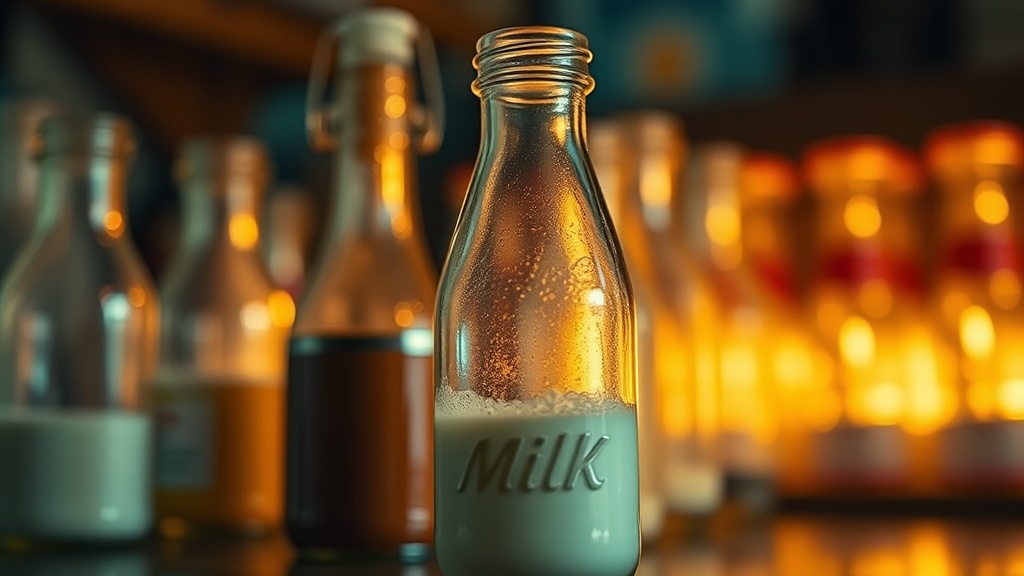
The Golden Age of the Glass Milk Bottle

Most people assume that the era of the glass milk bottle ended with the rise of plastic, but that's a mistake. The "Golden Age" wasn't just about the physical production of glass; it was a specific window of design, branding, and material evolution that transformed a simple utility vessel into a collectible icon. This post looks at the technical shifts in glass manufacturing, the branding wars of the early 20th century, and why certain shapes—like the heavy-bottomed-gallon or the narrow-neck quart—hold such high value today.
Understanding this era requires more than just looking at pretty bottles on a shelf. You have to understand the chemistry of the glass and the logistics of the dairy industry. We're talking about a time when the vessel was as important as the product inside.
What Defined the Golden Age of Glass Milk Bottles?
The Golden Age was defined by the transition from hand-blown, irregular-shaped glass to standardized, mold-blown production that allowed for mass-market branding. Before the 1920s, many bottles were plain, functional, and lacked any identifying marks. Then, everything changed.
Dairy companies realized that a unique bottle shape or an embossed logo wasn't just a way to identify the product—it was a way to build brand loyalty. If a customer saw a specific-looking bottle on a doorstep, they knew exactly which local farm it came from. This led to a massive explosion in creativity (and a lot of very heavy glass).
The hallmarks of this era include:
- Embossed Branding: Names like Borden or local dairy farms were pressed directly into the glass.
- Heavy Weight: These weren't the thin, fragile bottles you see in modern grocery stores. They were built to survive being washed and reused hundreds of times.
- Varied Silhouettes: From the classic "stubby" milk bottle to the elegant, tall-necked glass carafes used for premium cream.
If you're just starting out, you might want to check out my guide on starting a milk bottle collection to see how these eras fit into a broader collecting strategy.
Why Did Glass Replace Ceramic and Metal?
Glass became the industry standard because it offered a level of hygiene and transparency that other materials couldn't match. While ceramic was common in the 19th century, it was heavy, prone to cracking, and opaque. Glass solved the visibility problem—customers could actually see if the milk was fresh or if something had gone wrong.
The move to glass was also driven by the industrialization of the dairy supply chain. As cities grew, the need for a standardized, easily sanitized vessel became a matter of public health. Glass could withstand the high temperatures of boiling water and chemical sanitizers used in the early 1900s. It was also much easier to mass-produce using automated glass-blowing machines. The history of the milk bottle shows how these technological leaps were actually public health victories in disguise.
It wasn't just about the glass itself, though. The way the bottles were sealed mattered too. Early glass bottles often used a simple cork or a ceramic stopper, but as the industry moved toward higher speeds, the development of the metal crown cap changed the game. You can read more about that shift in my post on the evolution of metal crown caps.
| Material Era | Primary Benefit | Main Drawback |
|---|---|---|
| Ceramic/Stone | Durability and insulation | Heavy, opaque, and hard to clean |
| Golden Age Glass | Transparency and branding | Fragile if dropped |
| Plastic (Modern) | Weight and cost-efficiency | Lack of aesthetic and collectible value |
How Much Is a Vintage Glass Milk Bottle Worth?
The value of a vintage glass bottle depends almost entirely on its rarity, its maker, and its physical condition. A standard, unbranded clear glass quart might only fetch a few dollars, but a highly embossed, branded bottle from a defunct local dairy can go for hundreds.
Here is a breakdown of what drives the price up in the current market:
- The "Maker" Factor: If the bottle features a well-known brand name or a unique crest, the price jumps.
- Color Variations: While most milk bottles are clear or slightly aqua, colored glass (like amber or cobalt) is much rarer and highly sought after.
- Condition of the Base: Collectors look at the "wear" on the bottom. A bottle with a perfectly smooth, unchipped base is worth significantly more than one that has been through a rough wash cycle.
- Completeness: If the bottle originally had a specific glass lid or a unique metal cap, having that original piece can double the value.
Don't forget that even "plain" bottles have value if they are from a specific, niche region. A local Chicago dairy bottle from the 1940s might be worth more to a local collector than a famous national brand. It's a nuanced market—don't assume a lack of a logo means a lack of value.
One thing to keep in mind: a single scratch might not kill the value, but "sick glass" (cloudiness caused by chemical etching) will. If you're buying vintage, always look closely at the clarity of the glass. To keep your current pieces looking their best, you should follow my tips on preserving the shine of your glass.
The transition from glass to plastic wasn't just a change in material; it was the end of an era of craftsmanship. When we look at these bottles, we aren't just looking at old containers. We're looking at the remnants of a time when the vessel was a piece of marketing, a piece of history, and a piece of art. Whether you collect for the aesthetic or the historical weight, the Golden Age of glass remains the high-water mark for the industry.